
Terrorist Supporting Org Designations: A Short Bibliography

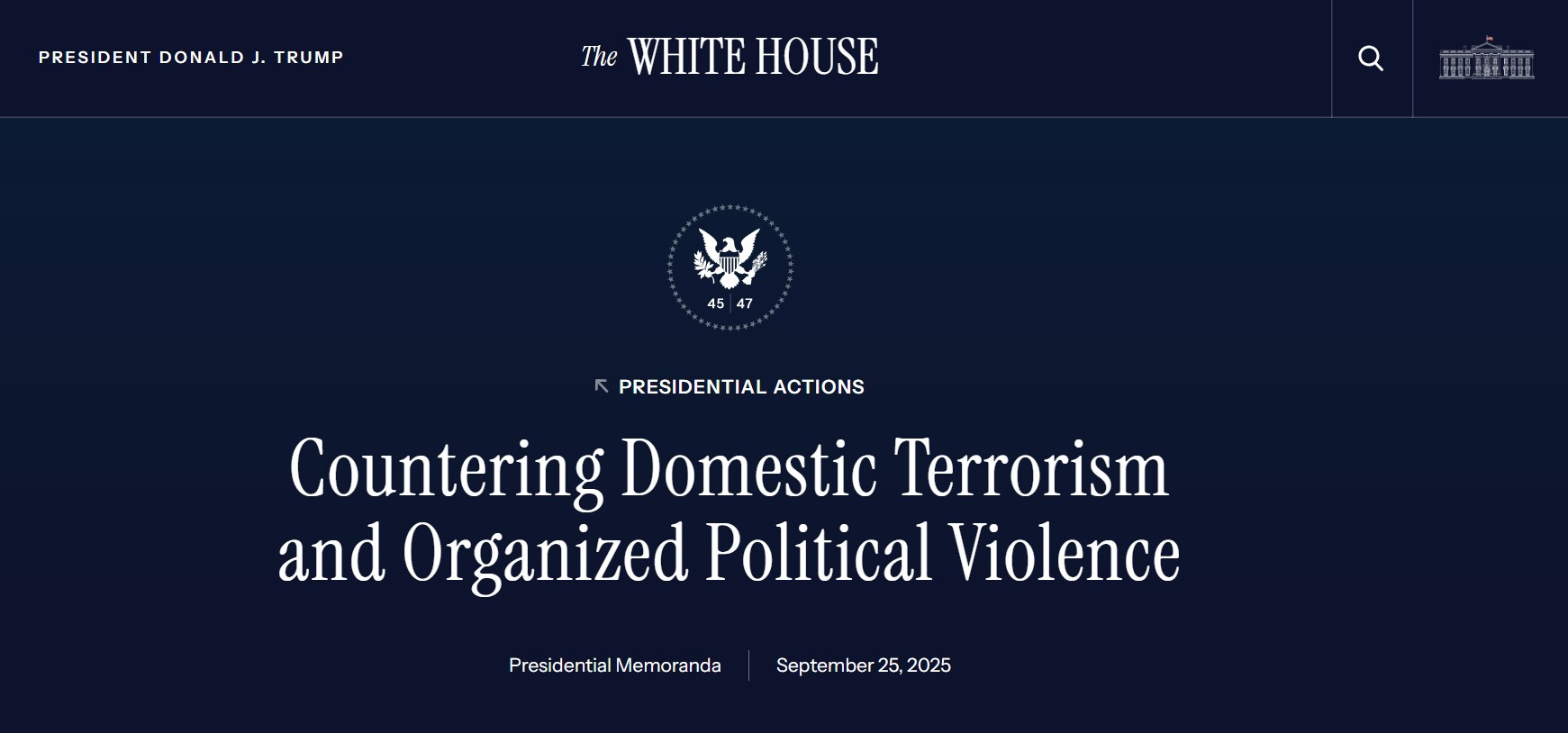
There really is not much even a domestic U.S. tax exempt organization can do if the Secretary of State or Treasury decide that it supports a foreign terrorist organization. Under current law, there is no right of pre-designation notice nor meaningful administrative or judicial review. And even if there were, an organization would have to prove (1) the supported foreign organization is not a terrorist and, failing that, (2) that the designated organization provided no such support, and that according to varying definition of support. All the while contending with assertions of national security potentially precluding the organization from even seeing the evidence in support of the designation and resulting suspension of tax exemption. The badly mischaracterized nonprofit killer bill would have made the task a little easier, contrary to what most in Civil Society believe.
Oh sure, there are all kinds of constitutional problems with the current law by which IRC 501(p) can be invoked. It pretty clearly violates the due process clauses. But by the time constitutional rights are vindicated, a designated exempt organization will have suffered a “financial death sentence” as Justice Hugo Black once said about an identical designation procedure during the Red Scare. “In the present climate of public opinion it appears certain that the Attorney General’s much publicized findings, regardless of their truth or falsity, are the practical equivalents of confiscation and death sentences for any blacklisted organization not possessing extraordinary financial, political or religious prestige and influence.” Black said those words in 1951 but they are equally applicable today.
Here is an excerpt from a Tax Notes article (subscription required) published this week. The article discusses the narrow and most likely futile paths to overturning a designation:
Challenging a Designation or Suspension
A previous article addressed the procedural tax hurdles to bringing a challenge to a (C) designation. In sum, while section 501(p)(5) bars judicial review of suspension of exempt status in tax-related proceedings, organizations should be able to seek administrative review and federal court appeals of FTO designations, as well as injunctive and declaratory relief against TEL and SDGT designations by the president or the designating federal agency, without running afoul of the Anti-Injunction Act or Declaratory Judgment Act. Should the designation be enjoined, the suspension of exempt status would fall away.
But how should an exempt organization seeking relief from erroneous designation proceed substantively? Again, much depends on which statutory authority (or authorities) is invoked to make the designation.
The path forward for litigants challenging an (A) suspension for an FTO designation is clearest. First, the organization can petition the secretary of state for revocation of the designation under 8 U.S.C. section 1189(a)(4)(B). The time to file such a petition for an initial designation is two years, and the petitioner must show that the “relevant circumstances . . . are sufficiently different from the circumstances that were the basis for the designation such that a revocation with respect to the organization is warranted,” or that “the circumstances that were the basis for the designation have changed in such a manner as to warrant revocation.”
Second, a designated FTO can file an initial challenge or appeal the denial of a petition for revocation to the D.C. Circuit. In the circuit court, the designated FTO can contend that a factually unsupported designation was arbitrary and capricious because the designating agency failed to make the necessary findings or the findings were unsupported by the administrative record.
As previously mentioned, TEL designations do not appear to have a direct administrative petition process, so an entity designated on the TEL should file a federal district court action.
Once in federal court, both TEL and FTO designations cross-reference substantive definitions of “terrorist activity” and “terrorist organization,” giving courts relatively clear definitional standards against which to review a designation. Simply put, if the administrative record does not support a finding that the organization was engaged in the enumerated “terrorist activities,” the designation should be set aside. Similarly, if the designated organization has a presence in the United States and the secretary of state fails to provide pre-designation notice, the designation may run afoul of the due process clause.
Challenging a designation underlying a (B) suspension is hazier. Litigants could certainly contend that the administration failed to meet the necessary prerequisites for invoking IEEPA or the United Nations Participation Act: either (1) an extraterritorial “unusual and extraordinary threat” to U.S. national security, foreign policy, or economy (IEEPA); or (2) a U.N. Security Council resolution directing the United States to take action. At least regarding IEEPA, however, a litigant would need to make a strong showing given “the settled premise that courts must be hesitant to review the executive’s declaration of a national emergency.” Note that the outcome of Learning Resources Inc. v. Trump, argued on November 5, 2025, may shed light regarding the extent of presidential authority under IEEPA. As with (A) designations, judicial review is extremely deferential.
Next, a (C) suspension may be subject to particularly exacting judicial scrutiny, particularly if the designation is for supporting terrorism (as opposed to engaging in terrorist activity). Under the due process clause of the Fifth Amendment, a law “is void for vagueness if it fails to ‘give fair notice of conduct that is forbidden or required,’ or ‘authorizes or even encourages arbitrary and discriminatory enforcement.’” What exactly constitutes supporting terrorism or terrorist activity as applied to an exempt organization? The text of section 501(p)(2)(C) provides no answers, particularly considering the more clearly drawn “material support” provision in 18 U.S.C. section 2339B.
Moreover, all three types of suspensions may be subject to challenge under the First Amendment. An exempt organization targeted for designation or suspension because of the nature of its mission would have a compelling First Amendment retaliation claim.
Finally, American history provides useful analogs in considering substantive challenges to viewpoint-based targeting of nonprofits. In Joint Anti-Fascist Refugee Committee, at the height of the McCarthy era, the Supreme Court heard a challenge to the inclusion and designation of three charitable organizations as “Communist” in the infamous Attorney General’s List of Subversive Organizations. Inclusion on the Attorney General’s List of Subversive Organizations had devastating consequences on the organizations, notably the revocations of their tax-exempt status. The charitable organizations sought injunctive and declaratory relief, arguing that designation had resulted in reputational damage, the loss of tax-exempt status, and the loss of donor contributions and members.
The Supreme Court granted relief without a majority opinion in a fractured 5-3 decision that drew opinions from each member of the majority — several of which remain relevant today on constitutional grounds. Justice Hugo Black characterized the Attorney General’s List of Subversive Organizations as “punish[ing] many organizations and their members merely because of their political beliefs and utterances” and thus a violation of the First Amendment. Justices William O. Douglas and Felix Frankfurter each penned eloquent concurrences that focused on the failure to afford pre-deprivation due process to the organizations.
With Joint Anti-Fascist Refugee Committee in mind, it is difficult to imagine courts sustaining a designation and suspension of the tax-exempt status of an established nonprofit organization simply because its mission is disfavored by the current administration. But even a designation and suspension that is without legal merit and later determined erroneous will have tremendous disruptive consequences for the designee and its donors. An exempt organization with reason to expect a designation and suspension should consult with counsel and be prepared to seek legal remedies quickly.
If your tax exempt client operates in the social justice or international arena, and you are concerned that it might soon find itself on the government’s naughty list, here are two good primers you ought to download and read ahead of time:
The Danger in Designations: U.S. Terrorism Designation Lists in Gaza and Beyond
Abstract
What is “terrorism”? The term has surged in U.S. political discourse following Hamas’s attack on Israel on October 7, 2023, Israel’s subsequent onslaught of Gaza, and escalating violence in the region involving Iran and similarly aligned groups like Hezbollah and the Houthis. U.S. politicians and thought leaders have characterized U.S. support for Israel’s bombardment as a fight against “terror,” described the violence conducted by Palestinians and their backers as “terrorism,” and accused pro-Palestinian U.S. protestors of “supporting terrorism.”
More than mere political rhetoric, “terrorism” is a term that carries big legal consequences. This is in large part because the U.S. government holds enormous power to officially designate individuals, groups, and governments as terrorists or supporters thereof and enact severe penalties on them as a result. This Article examines the primary mechanisms by which the executive branch compiles lists of terrorists and discusses the legal consequences of these designations, including economic sanctions, immigration prohibitions, criminal consequences, and private litigation. Further, this Article explores the subjective factors undergirding the very concept of “terrorism” in American law and policy, including U.S. geopolitical aspirations and race. Finally, this Article utilizes the ongoing crisis in Gaza as a case study to demonstrate how the practical impacts of terrorist designation lists suppress speech and dissent, prolong suffering, and prevent peaceful conflict resolution. Consequently, this Article proposes abandoning list-based counterterrorism altogether.
Designating Terrorist Organizations: Due Process Overdue
Abstract
This Comment argues that §1189 is unconstitutional because it deprives accused terrorist organizations due process under the Fifth Amendment to the U.S. Constitution. Section I will provide an explanation of §1189 and §2339B and their effect on both an organization and its supporters. Section II will provide a brief overview of the Due Process Clause in the context of administrative proceedings. Section III will show how §1189 deprives organizations due process under the Fifth Amendment because the statute does not include the most fundamental requirements of procedural due process. Section III(A) will address the initial question of whether organizations are entitled to due process protection. Section III(B) will compare the requirements of the Due Process Clause with the statute as it is written. Section III(C) will look at the additional protections the courts have read into the statute. Section III(D) will show why, even with these additional protections, the statute is missing a vital component of procedural due process-an unbiased adjudicator. Finally, section IV will show that under the United States Supreme Court’s current framework for analyzing the requirements of procedural due process, §1189 is unconstitutional and should be amended to include an unbiased and neutral decisionmaker to adjudicate an accused organization’s opposition.